Native 48-volt DC

A space for unblocking 48V.

The 48V Shop sits between suppliers and customers so all three of us can agree — on products with commonality, quality, and interoperability. We limit the list on purpose. Fewer parts. Real scale. A curator of quality in the middle, instead of a standard that takes years.

The intermediary

Mutual agreement. Not a catalogue of everything.

Previous obstacles stay stuck because no one is paid to hold the middle. We are. The shop is the place suppliers and customers can both trust — common sense, speed, and the feeling that this is the better way to do things.

  1. 01

    Suppliers

    A short list that actually ships. Year-one storefront free for specialists who already make native 48V.

  2. 02

    Customers

    Finish a system, not a scavenger hunt. Specs you can read. Parts that fit the parts next to them.

  3. 03

    The shop

    QA, curator, and custodian of quality. We pick, we reject, we stand behind the list. That is the product.

Two markets. Same voltage.

Do not mix the buyers. Do share the 48 volts.

Both aisles run native 48V DC. The people, the tone, and the SKUs do not mix. That is how a specialist shop stays useful.

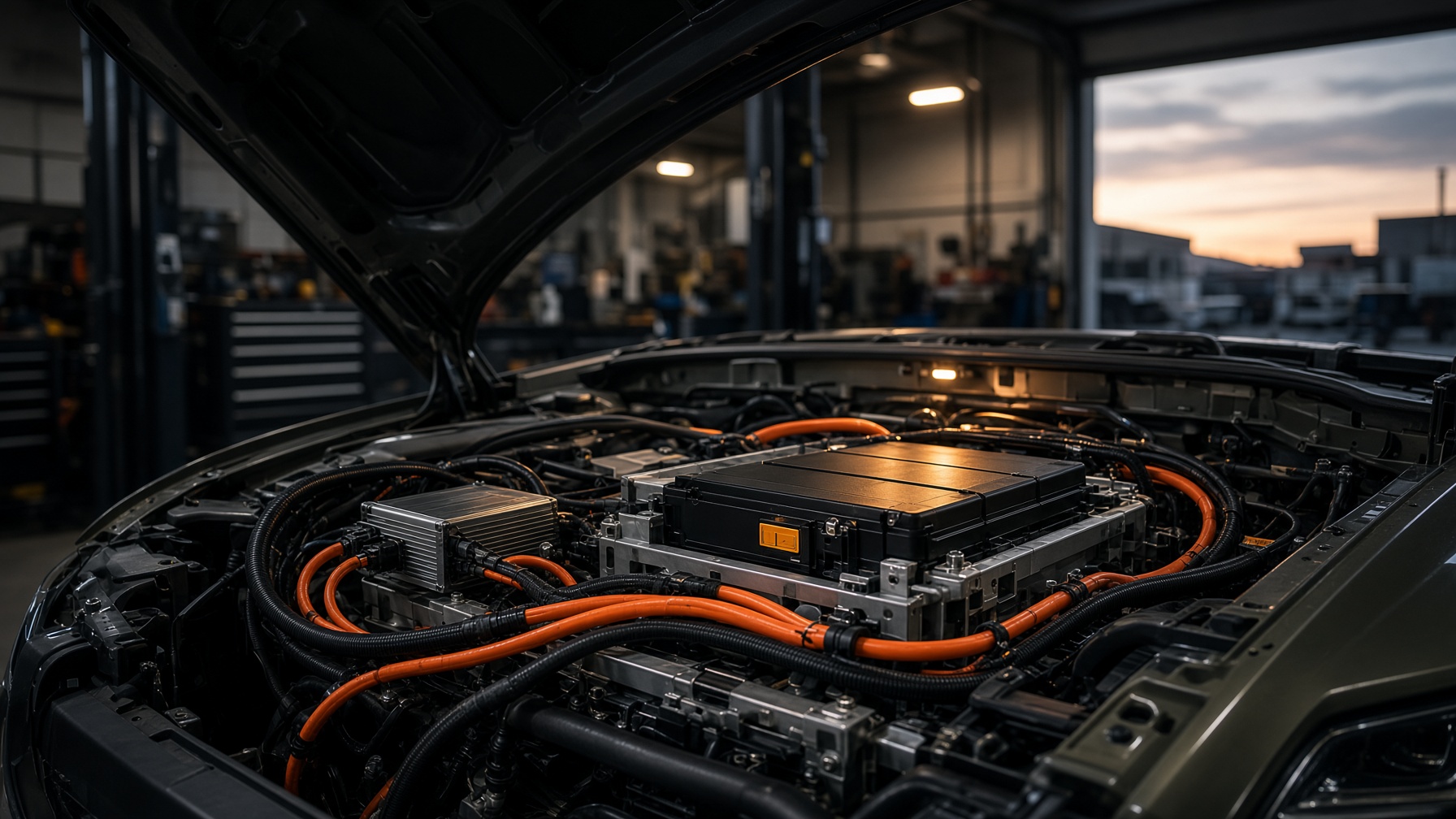
48-volt auxiliary architecture in an electric vehicle bay

Aisle A · B2B and OEM

EV auxiliary systems

Store and run as much as possible on native 48V. We sell the plant and parts that let that bus actually work — without converting down to 12V and wasting the point of the architecture.

  • Converters, distribution, HVAC, pumps, fans, lighting, steer and brake auxiliaries.
  • Buyers: OEMs, upfitters, converters, fleet. Spec sheets and MOQs, not lifestyle copy.
  • Job to be done: finish the 48V bay so the rest of the vehicle can stay 48V.

Native 48-volt DC setup in a camper van

Aisle B · Consumer facing

Mobile and off-grid

Vans, boats, cabins, and sites already live on a 48V bank. Most of what they buy still assumes 230V AC and an inverter. We merchandize the native 48V versions — lighting, refrigeration, cooking, water, air.

  • Things that run on the battery you already have. No inverter in between.
  • Buyers: owner-operators and the installers who kit them. Clear voltage. Honest watts.
  • Job to be done: complete a 48V living system from a short, trusted list.

Fewer, on purpose

Limit the parts. Gain the scale.

A long tail of almost-compatible SKUs is how this market stays expensive. We keep the list short so volume can collect: economies of scale, a supply chain that can actually plan, and efficiencies you cannot get from two hundred unique plugs.

  • Commonality — the same interface, voltage, and behaviour across makers.
  • Quality, consistency — we facilitate agreement, set the design, and provide QA to keep the bar.
  • Interoperability — if it does not complete a 48V system, it does not belong here.

What we are trying to overcome

Industrial standards are slow. The harness is not waiting.

Legal standards and industry programmes have their place. They also take years, and they tend to protect incumbents. We are not a standards body. We are the faster path: a trusted list, held in public, that people can buy against now.

Hundreds of one-offs

A modern vehicle can carry more than two hundred different low-voltage connector types. Most of them are custom. The hidden cost sits in the harness, not the datasheet.

Standards that take years

Attempts to unify low-voltage interfaces have been running since the combustion era. Tesla’s LVCS is the latest bid. The pattern does not change: competing corporate specs, no winner, another decade.

Nobody will cross-warranty

Suppliers will not stand behind a mix of brands. Liability, not physics, is what keeps parts from plugging into each other. Industry bodies cannot move that fast. We can.

48V makes the mess worse

The shift off 12V is already here. Without a short, agreed list, every converter, pump, fridge, and tool arrives with its own plug, pinout, and excuse.

Placeholder · not for sale yet

UniKcell comes later.

One LFP cell architecture. Very safe. Simple to manage. A shared 48V pack for tools, mobility, and appliances — only after the two aisles above exist. We will not sell a pack into an empty catalog.

Future development · watch this space

The shop is being stood up

Common sense, speed, and trust.

Density before hardware. If you already ship native 48V, or you are trying to finish a 48V system, this is the table. Write, and say which side you sit on.

For suppliers

Specialist 48V only. Year-one storefront is free. We curate. If it is not native 48V, it will not be listed.

For buyers

EV auxiliary, or mobile and off-grid. Tell us the system you are finishing. We will point you at the short list as it fills.